Your Quick-Start Guide to the 2026 Tax Season: Do This First
- Sofy tax

- 2 hours ago
- 5 min read
Tax season is here, and you're probably wondering where to even start. Between gathering paperwork, understanding new tax laws, and choosing how to file, it can feel overwhelming. The good news? Getting started is simpler than you think when you know what to do first.
This guide answers the most common questions about tackling the 2026 tax season: whether you're filing as an individual, running a side hustle, or managing a small business.
When does the 2026 tax filing season officially start and end?
The 2026 tax filing season is now underway. The deadline to file your 2025 tax return is April 15, 2026.
This gives you a few months to gather documents, review any tax law changes, and decide how you want to file. If you're someone who likes to get it done early, filing sooner means getting your refund faster. If you need more time, you can request an extension: but more on that later.
What documents should I gather first before doing anything else?
Start with the basics. Before you dive into forms or software, collect these essential items:
Personal information:
Social Security numbers for yourself, your spouse, and any dependents
Dates of birth for everyone on your return
Your current mailing address
Bank routing and account numbers (for direct deposit of your refund)
Income documents:
W-2 forms from your employer(s)
1099 forms if you're a freelancer, contractor, or have side income
1099-INT or 1099-DIV for interest and dividend income
Any other income statements
Last year's tax return is also helpful as a reference point. It shows what you claimed before and can help you spot changes.
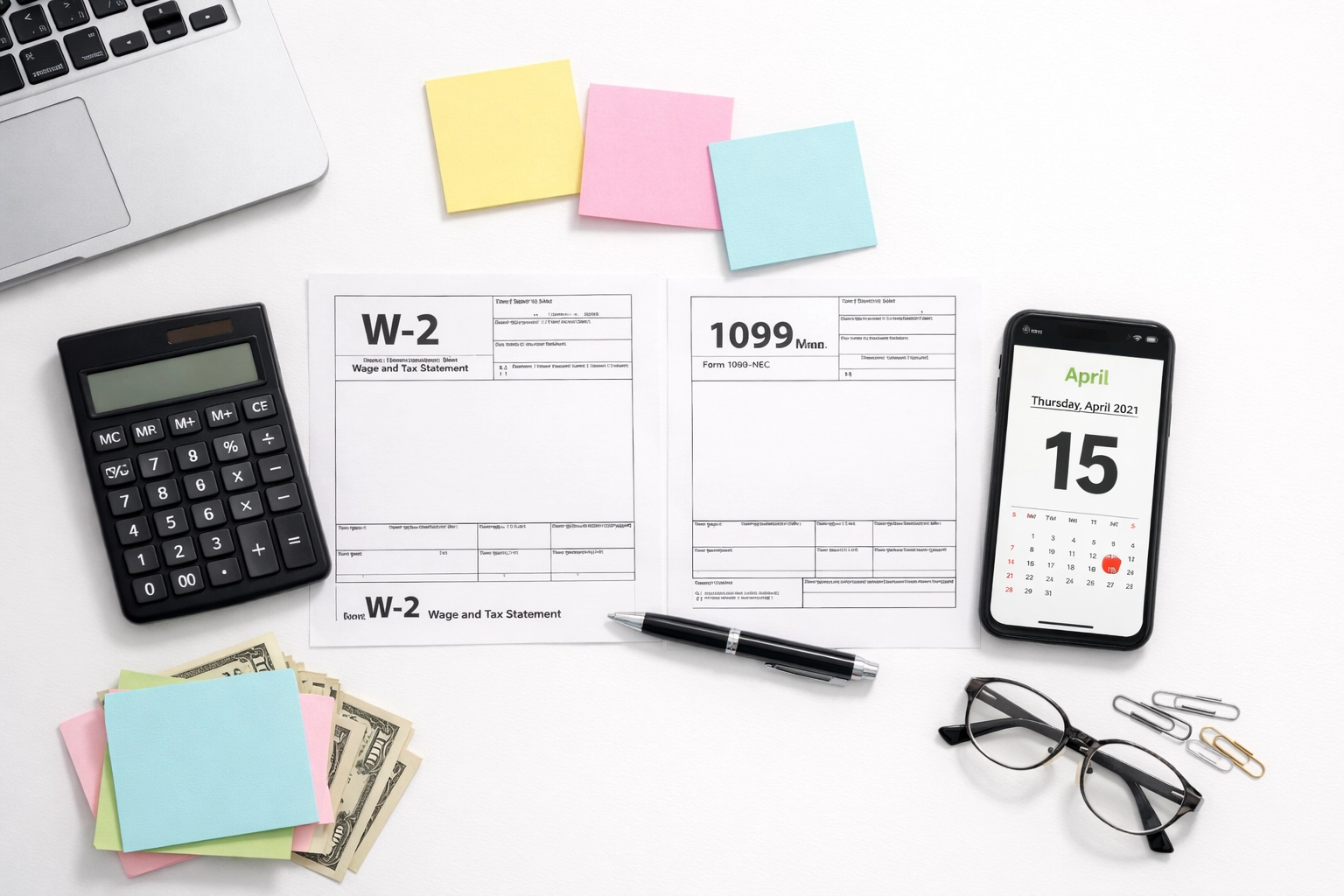
Having everything organized upfront prevents delays and reduces the chance of errors that could trigger an audit or slow down your refund.
What major tax changes happened in 2026 that could affect my refund?
Great question: this year comes with some significant updates thanks to the Omnibus Budget Bill (OBBB). Several new provisions could actually increase your refund:
Larger standard deduction: You'll save between $75–$278 if you're filing single, or $150–$555 if you're married filing jointly, depending on your tax bracket.
Overtime deduction: If you work overtime, you could save around $1,400. This benefits an estimated 17 million taxpayers.
Higher SALT cap: The state and local tax deduction cap increased, which helps about 15 million people who itemize their deductions.
Tips deduction: If you earn tips as part of your income, you could save approximately $1,400. This applies to roughly 5–10 million eligible taxpayers.
Auto loan interest deduction: This is a brand-new benefit for 2026 that could provide additional savings.
Refundable adoption credit: Families who adopted in 2025 may qualify for this newly available credit.
Understanding these changes helps you maximize your refund. If any of these apply to your situation, make sure you're claiming them.
How do I decide whether to file myself or hire someone?
This depends on your income level and how comfortable you feel with tax preparation. Here are your options:
Free online filing: If your adjusted gross income is $89,000 or less, you can use IRS Free File to prepare and submit your return at no cost.
Free in-person assistance: Programs like VITA (Volunteer Income Tax Assistance), AARP Tax-Aide, and TCE (Tax Counseling for the Elderly) offer free help if you:
Earn $69,000 or less
Are over 60 years old
Have a disability
Have limited English skills
Paid tax preparer: If your taxes are more complex: maybe you own a business, have multiple income streams, or want professional guidance: hiring a preparer makes sense. Just verify they have a valid Preparer Tax Identification Number (PTIN) and check their credentials through the IRS directory.

The key is choosing the option that matches your situation and comfort level. There's no one-size-fits-all answer.
What if I can't file by April 15? What happens then?
Life happens. If you can't file by the April 15 deadline, you can request an extension that gives you until October 15, 2026 to submit your return.
Here's the important part: requesting an extension doesn't extend the time to pay taxes owed. If you think you'll owe money, you still need to estimate and pay that amount by April 15 to avoid penalties and interest charges.
Filing for an extension is straightforward through IRS Form 4868. It buys you time to organize everything properly without rushing, but make sure you handle any payment obligations first.
I'm a freelancer or have side hustle income: where do I even start?
Freelancers and side hustlers face a slightly different tax situation because you're likely receiving 1099 forms instead of W-2s. Here's your starting checklist:
Step 1: Gather all your 1099-NEC or 1099-MISC forms from anyone who paid you $600 or more during 2025.
Step 2: Track your business expenses. Things like home office costs, equipment, software subscriptions, and mileage can be deducted to lower your taxable income.
Step 3: Understand self-employment tax. As a freelancer, you're responsible for both the employee and employer portions of Social Security and Medicare taxes: that's about 15.3% of your net earnings.
Step 4: Consider quarterly estimated tax payments for 2026. If you expect to owe $1,000 or more, the IRS requires you to pay taxes throughout the year, not just at filing time.
Step 5: Decide whether to file a Schedule C (sole proprietor) or if you've formed an LLC or S-Corp, which involves different forms.

Being a freelancer doesn't have to be complicated. The key is staying organized and knowing what you can deduct.
What's the single most important thing I should do RIGHT NOW to prepare?
Create a dedicated tax folder: physical or digital: and start collecting every document as it arrives.
Don't wait until March or early April to scramble. W-2s and 1099s are being mailed out now. As soon as something arrives, add it to your folder. Check your email for digital versions too.
This simple habit saves you stress later and ensures you don't miss any income sources, which could result in IRS notices down the road.
How do I avoid common mistakes that delay refunds?
Most delays happen because of avoidable errors. Here's what to watch out for:
Double-check Social Security numbers. One wrong digit causes processing delays.
Choose direct deposit. Paper checks take longer and can get lost in the mail.
Report all income. The IRS receives copies of your W-2s and 1099s, so they'll know if you leave something out.
Claim the right filing status. Single, married filing jointly, head of household: pick the one that actually applies to you.
Sign and date your return. It sounds obvious, but unsigned returns get rejected.
Taking an extra 10 minutes to review everything before filing can save you weeks of waiting.

Where can I get help if I have specific questions about my tax situation?
If you run into questions specific to your situation: especially as a small business owner or someone with multiple income sources: professional guidance can save you money and headaches.
At Sofytax, we specialize in helping individuals, freelancers, and small business owners navigate tax season with confidence. Our team handles everything from simple returns to complex business filings, and the best part? You can get it all done from the comfort of your home with our online appointment system.
Hablamos Español – We're here to help you in the language you're most comfortable with.
Ready to check tax season off your list without the stress? Schedule your online appointment with Sofytax today and let's make sure you're maximizing your refund and staying compliant with all the new 2026 tax laws.
Final Thoughts: You've Got This
Starting the 2026 tax season doesn't have to feel overwhelming. Focus on gathering your documents first, understanding what changed this year, and choosing the filing method that works for your situation. Whether you file yourself or work with a professional, the important thing is to start now rather than waiting until the last minute.
Tax season is temporary. Getting it done right the first time means you can move on with your year: and hopefully enjoy that refund.
Comments