¿Trabajador independiente o con ingresos extra? 5 pasos para manejar bien tus impuestos 1099 / Freelancer or Side Hustler? 5 Steps to Get Your 1099 Taxes Right
- Sofy tax

- Feb 17
- 6 min read
English Version
Did you finally start that side hustle you've been dreaming about? Or maybe you went full-time freelance in 2025? That's amazing—but now tax season is here, and you're staring at a 1099 form wondering what on earth you're supposed to do with it.
Sound familiar?
Here's the deal: 1099 taxes aren't as scary as they seem. Yes, they're different from the W-2 world where everything gets automatically handled for you. But with the right approach, you can handle your freelance or side hustle taxes like a pro—without the panic attacks.
Let's break down exactly what you need to do in five straightforward steps.
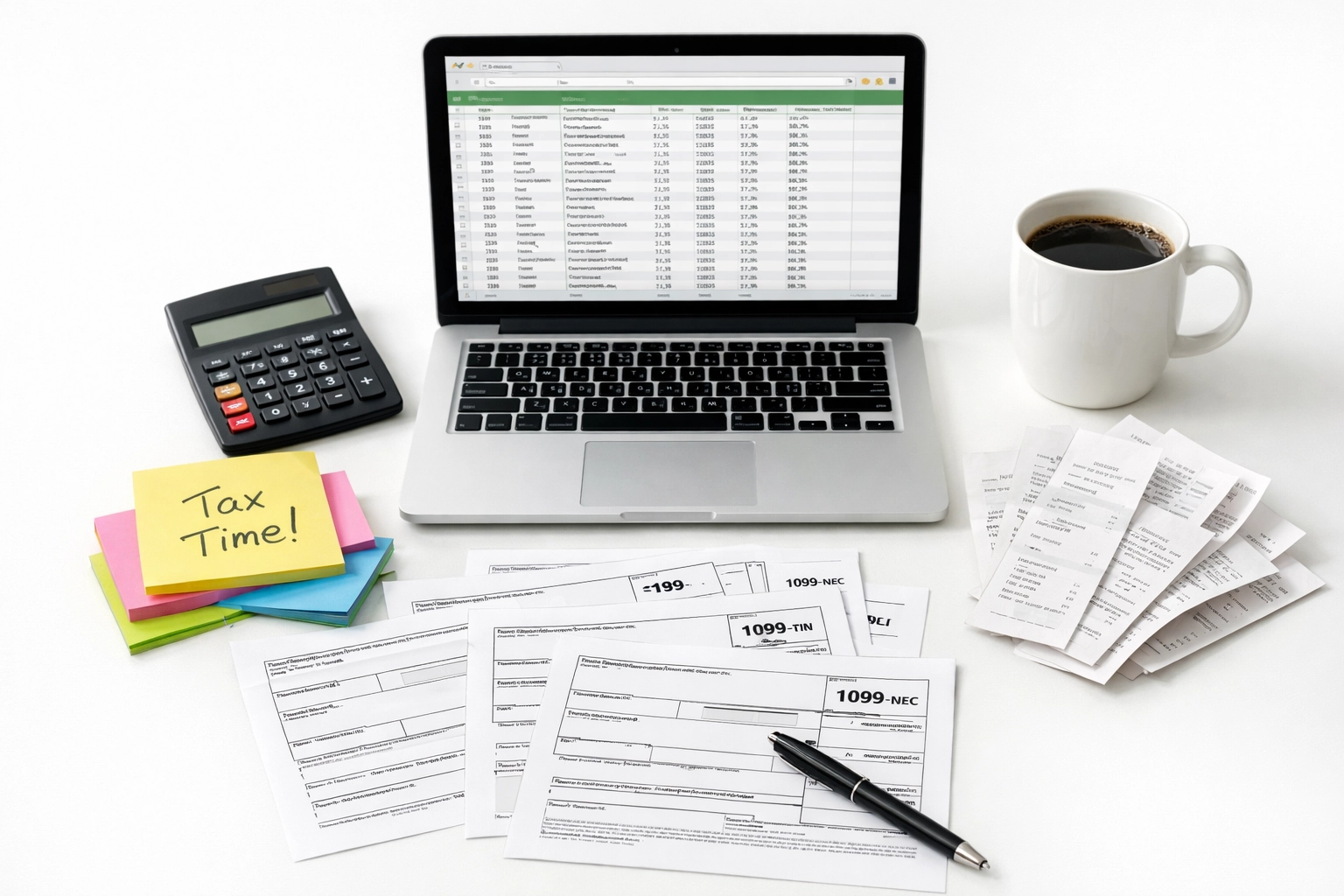
Step 1: Gather and Organize All Your Tax Documents
First things first—you need to collect everything. And I mean everything.
What you're looking for:
Form 1099-NEC from every client who paid you $600 or more in 2025. They're required to send this to you by January 31, 2026.
Form 1099-K if you received payments through third-party platforms like PayPal, Venmo, or payment processors (the threshold for 2025 was $5,000)
Bank statements showing all income deposits
Receipts for business expenses—supplies, equipment, software subscriptions, home office costs, mileage, meals with clients, professional development
Here's what most freelancers miss: You need to report ALL your income, even if you didn't receive a 1099 for it. That $400 you got paid in cash? Yes, that counts. The client who only paid you $300? That counts too.
Pro tip: Keep these records for at least three years. The IRS can audit you within that timeframe, and you'll need proof of everything you claimed.
Step 2: Complete Schedule C to Report Your Income and Expenses
Schedule C is your new best friend. This is the form where you report all your business income and expenses as a self-employed person.
Here's what goes on Schedule C:
Your total gross income (everything you earned)
Your business expenses (everything you spent to earn that income)
Your net profit or loss (income minus expenses)
The beauty of Schedule C? It lets you deduct legitimate business expenses to lower your taxable income. We're talking about things like:
Office supplies and equipment
Software and online tools
Marketing and advertising costs
Professional services (lawyers, accountants)
Business insurance
Travel expenses for business purposes
A portion of your home if you have a dedicated office space
Every dollar you can legitimately deduct is money that doesn't get taxed. That's why keeping good records is so important.

Step 3: Calculate Your Self-Employment Tax Using Schedule SE
Here's the part that shocks most new freelancers: You're responsible for paying both the employee AND employer portions of Social Security and Medicare taxes. This is called self-employment tax.
When you were a W-2 employee, your employer paid half of these taxes for you. Now that you're self-employed, you pay both halves—which adds up to 15.3% of your net earnings.
How it breaks down:
12.4% for Social Security (on earnings up to $168,600 for 2024)
2.9% for Medicare (on all net earnings)
An additional 0.9% Medicare tax if you earn over $200,000
Use Schedule SE to calculate this amount. The good news? You can deduct half of your self-employment tax on your 1040 form, which reduces your overall tax burden slightly.
Step 4: Make Quarterly Estimated Tax Payments
If you expect to owe more than $1,000 in taxes for the year, you need to make quarterly estimated tax payments. This is how the IRS gets paid throughout the year since you don't have an employer withholding taxes from your paycheck.
The quarterly deadlines for 2026 are:
April 15, 2026 (for Q1 2026)
June 15, 2026 (for Q2 2026)
September 15, 2026 (for Q3 2026)
January 15, 2027 (for Q4 2026)
Use Form 1040-ES to calculate and pay your estimated taxes. You can pay online through the IRS Direct Pay system, by check, or through the EFTPS system.
Important: Missing these payments or underpaying can result in penalties and interest charges. It's worth getting this right from the start.

Step 5: File Your Federal Tax Return (and Don't Forget State and Local Taxes)
When April rolls around, it's time to file your complete tax return using Form 1040. This is where everything comes together:
Your Schedule C (business income and expenses)
Your Schedule SE (self-employment tax)
Any other income or deductions you have
If you're 65 or older, you'll use Form 1040-SR instead.
Don't forget about state and local taxes! Most states require freelancers and self-employed individuals to file state income tax returns. Some cities have local income taxes too. Check your state's tax agency website to see what you need to file.
Need Help Navigating Your 1099 Taxes?
Look, taxes can get complicated fast—especially when you're juggling multiple clients, tracking expenses, and trying to run your business at the same time. One missed deduction or calculation error can cost you hundreds (or thousands) of dollars.
That's where we come in.
Versión en Español
¿Finalmente empezaste ese negocio adicional con el que soñabas? ¿O tal vez te convertiste en freelancer a tiempo completo en 2025? Eso es increíble, pero ahora llegó la temporada de impuestos y estás mirando un formulario 1099 preguntándote qué diablos se supone que debes hacer con él.
¿Te suena familiar?
Aquí está la realidad: los impuestos 1099 no son tan aterradores como parecen. Sí, son diferentes del mundo W-2 donde todo se maneja automáticamente por ti. Pero con el enfoque correcto, puedes manejar tus impuestos de freelancer o negocio adicional como un profesional, sin ataques de pánico.
Vamos a desglosar exactamente lo que necesitas hacer en cinco pasos directos.
Paso 1: Reúne y Organiza Todos tus Documentos Fiscales
Primero lo primero: necesitas recopilar todo. Y me refiero a todo.
Lo que estás buscando:
Formulario 1099-NEC de cada cliente que te pagó $600 o más en 2025. Están obligados a enviártelo antes del 31 de enero de 2026.
Formulario 1099-K si recibiste pagos a través de plataformas de terceros como PayPal, Venmo o procesadores de pago
Estados de cuenta bancarios que muestren todos los depósitos de ingresos
Recibos de gastos comerciales: suministros, equipo, suscripciones de software, costos de oficina en casa, millaje, comidas con clientes, desarrollo profesional
Esto es lo que la mayoría de los freelancers pasan por alto: necesitas reportar TODOS tus ingresos, incluso si no recibiste un 1099 por ello. ¿Esos $400 que te pagaron en efectivo? Sí, eso cuenta. ¿El cliente que solo te pagó $300? Eso también cuenta.
Consejo profesional: Conserva estos registros durante al menos tres años. El IRS puede auditarte dentro de ese plazo, y necesitarás prueba de todo lo que reclamaste.
Paso 2: Completa el Anexo C para Reportar tus Ingresos y Gastos
El Anexo C es tu nuevo mejor amigo. Este es el formulario donde reportas todos tus ingresos y gastos comerciales como persona que trabaja por cuenta propia.
Esto es lo que va en el Anexo C:
Tus ingresos brutos totales (todo lo que ganaste)
Tus gastos comerciales (todo lo que gastaste para ganar esos ingresos)
Tu ganancia o pérdida neta (ingresos menos gastos)
¿La belleza del Anexo C? Te permite deducir gastos comerciales legítimos para reducir tu ingreso gravable.
Paso 3: Calcula tu Impuesto de Trabajo Autónomo Usando el Anexo SE
Aquí está la parte que sorprende a la mayoría de los nuevos freelancers: eres responsable de pagar tanto la parte del empleado COMO la del empleador de los impuestos de Seguro Social y Medicare. Esto se llama impuesto de trabajo autónomo.
Usa el Anexo SE para calcular este monto. Equivale al 15.3% de tus ganancias netas.
Paso 4: Realiza Pagos de Impuestos Estimados Trimestrales
Si esperas deber más de $1,000 en impuestos para el año, necesitas hacer pagos de impuestos estimados trimestrales.
Las fechas límite trimestrales para 2026 son:
15 de abril de 2026
15 de junio de 2026
15 de septiembre de 2026
15 de enero de 2027
Usa el Formulario 1040-ES para calcular y pagar tus impuestos estimados.
Paso 5: Presenta tu Declaración de Impuestos Federales (y No Olvides los Impuestos Estatales y Locales)
Cuando llegue abril, es momento de presentar tu declaración de impuestos completa usando el Formulario 1040. Aquí es donde todo se une.
¡No te olvides de los impuestos estatales y locales! La mayoría de los estados requieren que los freelancers presenten declaraciones de impuestos sobre la renta estatales.
¿Necesitas Ayuda con tus Impuestos 1099?
Seamos honestos: los impuestos pueden complicarse rápidamente, especialmente cuando estás manejando múltiples clientes, rastreando gastos e intentando administrar tu negocio al mismo tiempo.
Ready to Get Your 1099 Taxes Done Right? / ¿Listo para hacer tus impuestos 1099 correctamente?
At Sofytax, we specialize in helping freelancers, side hustlers, and self-employed professionals navigate tax season with confidence. We'll make sure you're claiming every deduction you deserve, staying compliant with IRS requirements, and keeping more money in your pocket.
En Sofytax, nos especializamos en ayudar a freelancers, emprendedores y profesionales independientes a navegar la temporada de impuestos con confianza. Nos aseguraremos de que estés reclamando cada deducción que mereces, cumpliendo con los requisitos del IRS y guardando más dinero en tu bolsillo.
Schedule your online tax preparation appointment today and let's tackle your 1099 taxes together. No confusing jargon, no hidden fees—just straightforward, professional tax help when you need it most.
Agenda tu cita de preparación de impuestos en línea hoy y enfrentemos juntos tus impuestos 1099. Sin jerga confusa, sin tarifas ocultas, solo ayuda fiscal profesional y directa cuando más la necesitas.
Comments