2026 Tax Brackets and Standard Deduction Explained in Under 3 Minutes
- Sofy tax

- Feb 14
- 4 min read
Tax season is almost here, and you're probably wondering: what's different this year? Whether you're filing as an individual, running a side hustle, or managing a small business, understanding 2026 tax brackets and standard deductions is crucial for keeping more money in your pocket. Let's break it down in the simplest way possible.
What Exactly Is the Standard Deduction?
Think of the standard deduction as your tax-free zone. It's a fixed dollar amount the IRS lets you subtract from your gross income before calculating what you owe. No receipts required, no itemizing: just automatic savings.
For 2026, here's what you can expect:
Single filers: $16,100
Married filing jointly: $32,200
Head of household: $24,150
Married filing separately: $16,100
If you're 65 or older, or if you're blind, you get extra deductions added on top. Single filers and heads of household can add $2,050, while married couples filing jointly can add $1,650 per qualifying person.

How Do Tax Brackets Actually Work?
Here's the thing most people get wrong: being in a higher tax bracket doesn't mean all your income gets taxed at that rate. The U.S. uses a progressive tax system, which means you pay different rates on different portions of your income.
There are seven federal tax brackets for 2026: 10%, 12%, 22%, 24%, 32%, 35%, and 37%.
Let's say you're single and earn $60,000. You don't pay 22% on everything. Instead:
You pay 10% on the first $12,400
Then 12% on income between $12,401 and $50,400
Then 22% only on the amount between $50,401 and $60,000
See the difference? You're only hitting that 22% bracket on a small portion of your income.
What Are the 2026 Tax Bracket Thresholds?
Based on current IRS updates, here's a snapshot of where each bracket starts:
For single filers:
10%: Up to $12,400
12%: $12,401 to $50,400
22%: $50,401 to $105,700
24%: $105,701 to $256,225
Higher brackets continue from there
For married filing jointly:
10%: Up to $24,800
12%: $24,801 to $100,800
22%: $100,801 to $211,400
24%: $211,401 to $512,450
Higher brackets continue from there
Always verify the latest numbers with the IRS or your tax professional, as these can be adjusted for inflation.

How Do the Standard Deduction and Tax Brackets Work Together?
Here's where it all comes together. First, you subtract your standard deduction from your total income. What's left is your taxable income: the amount that actually gets taxed using those brackets.
Simple example:
You earn $70,000 as a single filer
Subtract the $16,100 standard deduction
Your taxable income is $53,900
Now you apply the progressive tax rates to that $53,900
This is why the standard deduction is so powerful: it can literally drop you into a lower tax bracket or reduce how much of your income gets taxed at higher rates.
Why Should Freelancers and Small Business Owners Care?
If you're self-employed or running a side hustle, this matters even more. You're dealing with quarterly estimated taxes, and understanding your bracket helps you plan how much to set aside.
Plus, you might have additional deductions available through business expenses. But the standard deduction is your baseline: the minimum you get to subtract automatically. Many freelancers benefit from itemizing instead, but you need to know your standard deduction amount to make that comparison.
What Changed for 2026 Compared to Previous Years?
The main change? Inflation adjustments. The IRS typically adjusts tax brackets and standard deduction amounts each year to account for inflation. For 2026, you'll notice the thresholds and deduction amounts are slightly higher than 2025.
This is good news: it means you can earn a bit more before jumping into the next tax bracket, and your standard deduction shields more of your income from taxes.
How Can I Prepare for the 2026 Tax Season?
Start by organizing your documents now. Here's your quick checklist:
Gather all W-2s and 1099 forms
Track any major life changes (marriage, new business, home purchase)
Review whether standard deduction or itemizing makes more sense for you
Estimate your taxable income
Calculate which bracket you'll fall into
If you're unsure about any of this, don't guess. Getting professional help early can save you hundreds or even thousands of dollars in missed deductions or penalties.
What If My Income Varies Throughout the Year?
This is super common for freelancers and small business owners. The key is to make conservative estimates. If you think you'll earn more this year, prepare for the higher bracket. If you end up earning less, you'll get a refund.
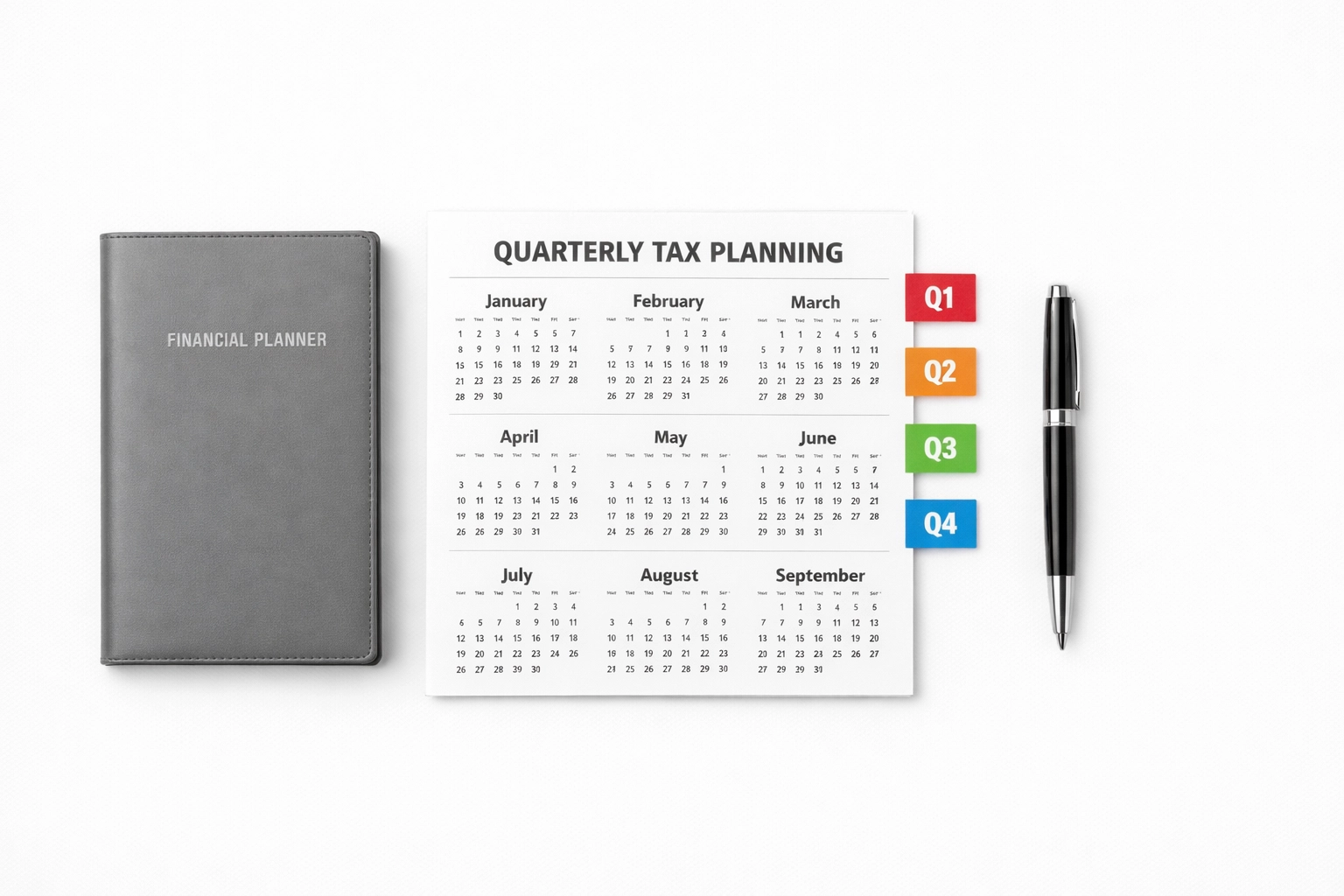
For quarterly estimated taxes, review your income every three months and adjust your payments accordingly. It's better to overpay slightly and get money back than to underpay and face penalties.
Should I Take the Standard Deduction or Itemize?
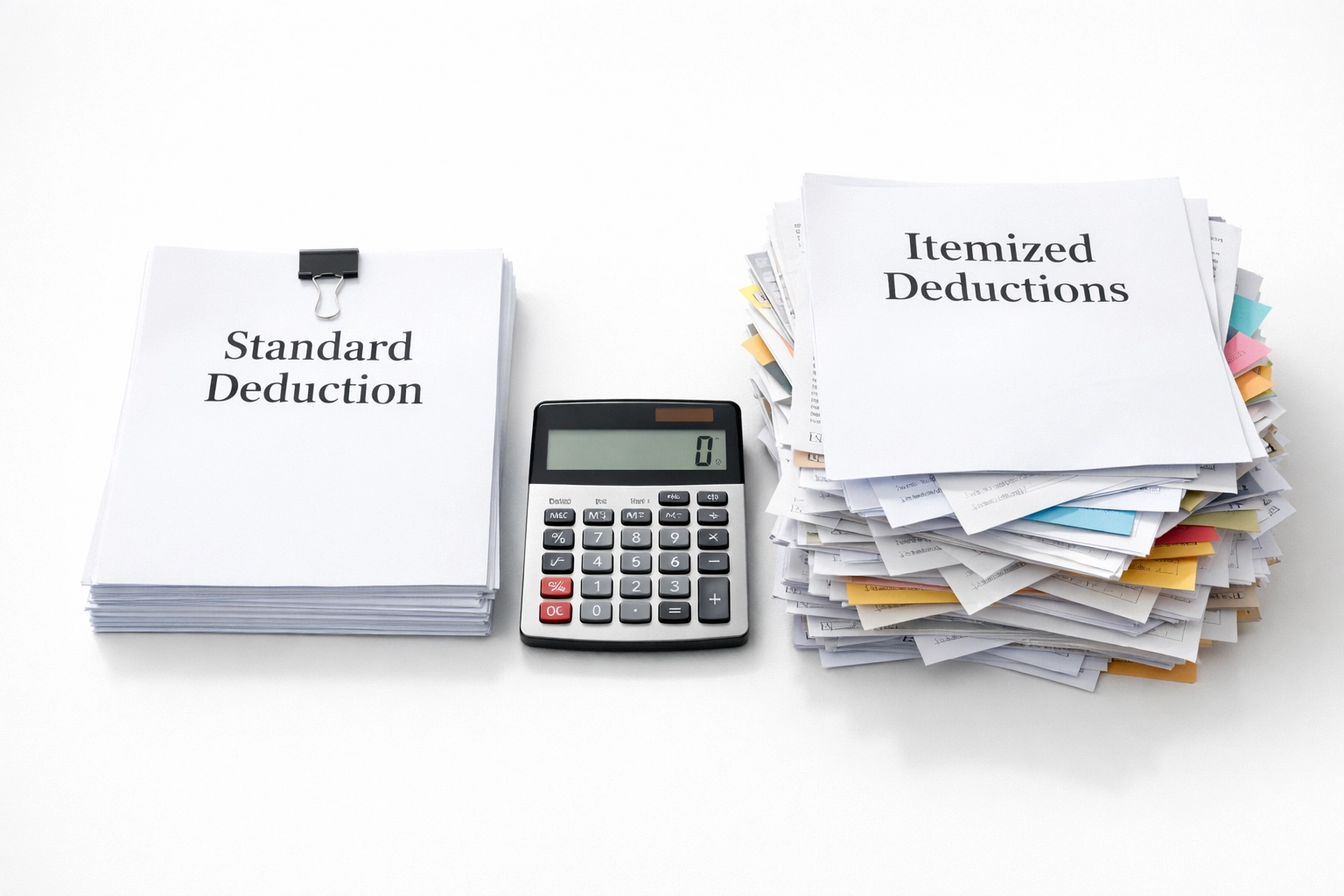
Most people benefit from the standard deduction, especially with the higher amounts for 2026. You should only itemize if your deductible expenses (mortgage interest, charitable donations, medical expenses, etc.) exceed your standard deduction amount.
For 2026, that means you'd need more than $16,100 in deductible expenses as a single filer, or more than $32,200 if you're married filing jointly. Many taxpayers don't hit these thresholds, making the standard deduction the simpler, better choice.
Where Do I Go From Here?
Understanding tax brackets and standard deductions is just the beginning. Everyone's tax situation is unique, and the strategies that work for a W-2 employee might not apply to a freelancer or small business owner.
The smartest move? Get personalized guidance from tax professionals who understand your specific situation.
Ready to Tackle Your 2026 Taxes with Confidence?
Don't navigate tax season alone. At Sofytax, we specialize in helping individuals, freelancers, and small business owners maximize their deductions and minimize their stress: all from the comfort of your home.
Schedule your online appointment today and let our team handle the complexity while you focus on what matters most. ¡Hablamos Español!
Book your appointment now and start the 2026 tax season with a clear strategy and peace of mind.
Have more questions about your specific tax situation? Our team at Sofytax is here to help. Visit sofytax.com or contact us directly to speak with a tax professional who understands your needs.
Comments